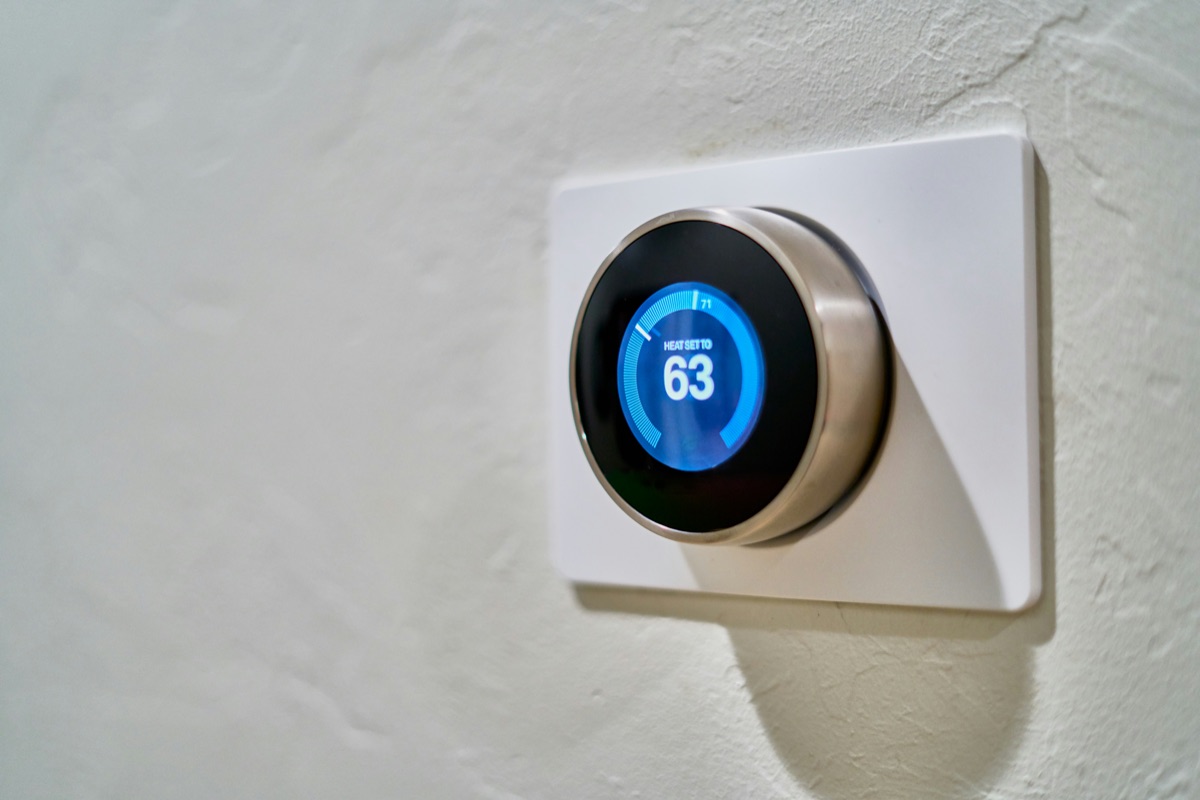
Smart thermostats like the Nest, Ecobee, and Honeywell Home are among the most popular smart home upgrades. They learn your schedule, adjust automatically, and let you control your home's temperature from anywhere. Plus, many utility companies offer rebates.
But here's what the marketing doesn't always tell you: not every home is compatible with every smart thermostat. Let's break down what you need to know.
How Traditional Thermostats Work
Before diving into smart thermostats, it helps to understand the basics:
Your thermostat connects to your HVAC system with low-voltage wires (typically 24V). Different wires control different functions:
- R (Red) — Power from the transformer
- W (White) — Heat
- Y (Yellow) — Cooling/AC compressor
- G (Green) — Fan
- C (Blue) — Common wire (completes the circuit for constant power)
Older thermostats were simple switches — they just needed a couple of wires to turn heating or cooling on and off.
The C-Wire Challenge
Here's where smart thermostats get tricky: they need constant power to run their WiFi, display, and processors.
Traditional thermostats don't need constant power — they only draw power when actively switching something on or off. So many older homes only have 4 wires running to the thermostat, with no "C" (common) wire.
Without a C-wire, you have a few options:
- Run a new C-wire — The best solution, but requires fishing wire through walls
- Use a C-wire adapter/add-a-wire kit — A workaround that repurposes existing wires
- Use a thermostat with battery backup — Some Nest models can work without a C-wire (sort of)
- Power extender kit — Ecobee includes one; installs at your furnace
Each option has trade-offs. Running a new wire is ideal but more involved. Adapter kits work but can cause issues with some systems.
Compatibility Check
Before buying a smart thermostat, check compatibility:
Step 1: Turn Off Power
Turn off your HVAC system at the breaker. Safety first.
Step 2: Remove Your Current Thermostat
Take a photo of the wiring before disconnecting anything! This is important.
Step 3: Count and Identify Wires
- How many wires do you have?
- What colors are they?
- Which terminals are they connected to?
Step 4: Use the Manufacturer's Compatibility Checker
These tools will tell you if your system is compatible and what you might need.
Systems That May Not Be Compatible
Some HVAC systems don't work well (or at all) with standard smart thermostats:
High-Voltage Systems
Baseboard heaters, wall heaters, and some older heating systems use line voltage (120V or 240V) instead of low voltage (24V). Standard smart thermostats like Nest and Ecobee cannot be used with these systems.
There are specialized smart thermostats for high-voltage systems (like Mysa or Stelpro), but they're different products.
Proprietary Systems
Some HVAC brands use proprietary communication protocols. If your current thermostat is hard-wired specifically for your furnace brand, a standard smart thermostat may not work.
Multi-Stage and Heat Pump Systems
These are usually compatible, but you need to ensure the smart thermostat supports your specific setup. A 2-stage furnace with a heat pump has more wires and more complex logic than a simple single-stage system.
Millivolt Systems
Some older gas fireplaces and heating systems use millivolt controls. These are not compatible with smart thermostats without additional equipment.
DIY vs. Professional Installation
When DIY Works
Smart thermostat installation can be DIY-friendly if:
- ✅ You have a C-wire already
- ✅ Your system is a simple single-stage heat/cool setup
- ✅ You're comfortable working with low-voltage wiring
- ✅ The compatibility checker gives you a clear "yes"
When to Call a Pro
- ❌ You don't have a C-wire and need one run
- ❌ Your system is complex (heat pump, multi-stage, zoned)
- ❌ The compatibility checker is unclear or says "maybe"
- ❌ You're not comfortable working with wires
- ❌ You have multiple thermostats/zones
What We Can Do
At Finally Fixed Home Services, we install smart thermostats for systems that use low-voltage wiring (which is most modern forced-air systems). Here's what we offer:
- Compatibility assessment — We'll check your current wiring and system
- C-wire installation — If you need one, we can run it
- Thermostat mounting and wiring — Clean, professional installation
- App setup and configuration — We'll help you get connected and set up schedules
- System testing — We verify heating, cooling, and fan all work correctly
What We Cannot Do
We're not HVAC technicians or electricians. We cannot:
- ❌ Work on high-voltage (120V/240V) heating systems
- ❌ Modify or repair your furnace or AC unit
- ❌ Install line-voltage thermostats
- ❌ Diagnose HVAC problems
If your system needs HVAC work, we'll let you know and recommend you contact an HVAC professional.
Energy Savings: Are They Real?
Smart thermostats claim 10-15% savings on heating and cooling costs. Is it true?
It depends on your habits:
- If you already program your thermostat and adjust it when away → Savings will be minimal
- If you leave the thermostat at one temperature 24/7 → You'll likely see real savings
- If you're often away or have an irregular schedule → Learning thermostats shine here
The convenience factor is often worth more than the energy savings. Being able to adjust your home's temperature from bed, or turn on the heat before you get home from vacation, is genuinely useful.
Popular Smart Thermostat Options
Google Nest Learning Thermostat
- Learns your schedule automatically
- Sleek, modern design
- May work without C-wire (but not recommended)
- ~$250
Google Nest Thermostat (Budget)
- Simpler than the Learning version
- More affordable at ~$130
- Requires C-wire or add-a-wire kit
- Great value option
Ecobee Smart Thermostat
- Includes room sensors for better temperature balancing
- Built-in Alexa
- Includes power extender kit for no-C-wire situations
- ~$220-$250
Honeywell Home T6/T9
- Traditional thermostat company, reliable
- Good compatibility with complex systems
- T9 includes room sensors
- ~$150-$200
Ready to Upgrade Your Thermostat?
A smart thermostat is one of the most practical smart home upgrades you can make. If you're not sure about compatibility or don't want to deal with the wiring yourself, we're happy to help.
Contact us or call/text 720-933-3501 to schedule a smart thermostat installation.
Related Posts:
- 5 Signs Your Home WiFi Needs an Upgrade — Your smart thermostat needs reliable WiFi
- Doorbell Cameras: Should You Install It Yourself? — Another popular smart home upgrade