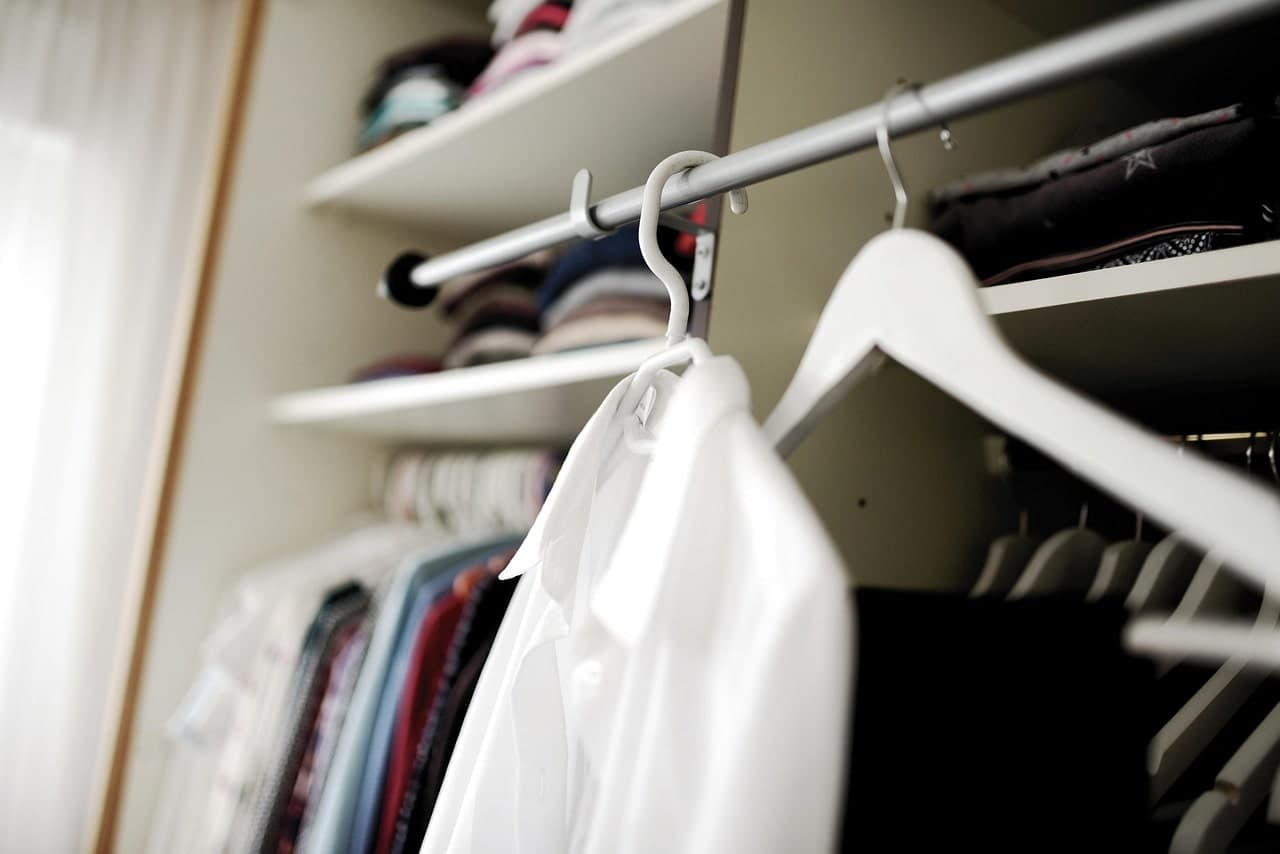
The standard builder-grade closet is just a rod and a shelf. Fine for hanging clothes, terrible for actually organizing your stuff.
You don't need a $5,000 custom closet system. A few smart additions can transform a basic closet into something that actually works.
Assess What You Have
The Standard Setup
Most closets come with:
- Single rod at about 66" from the floor
- Single shelf above the rod
- That's it
The Problem
This setup wastes space:
- Below hanging clothes: Wasted floor space
- Above the shelf: Wasted vertical space
- Short items: Take as much rod space as long items
What to Measure
Before buying anything:
- Width: Inside wall to inside wall
- Depth: Back wall to door opening
- Height: Floor to ceiling
- Obstructions: Light fixtures, outlets, vents
- Door clearance: How far can doors open?
Quick Wins (No Installation Required)
Hanging Organizers
Fabric hanging shelves:
- Hang from existing rod
- Great for sweaters, bags, accessories
- Instant vertical storage
- $15-30 at most stores
Over-Door Organizers
Use the back of closet doors:
- Shoe pockets
- Belt/scarf hooks
- Full-length mirror with storage
- No holes required
Shelf Dividers
Those wire dividers that clip onto existing shelves:
- Keep stacks from toppling
- Create sections for different items
- Easy to reposition
Double Hang Rods
Hang a second rod from the existing one:
- Doubles short-item capacity instantly
- Adjustable heights
- $10-20 for the rod and brackets
Basic Upgrades (Some Installation)
Additional Shelving
Above existing shelf:
- Most closets have 2+ feet of unused space above the top shelf
- Add 1-2 more shelves for seasonal or rarely-used items
- Wire shelving is cheapest and easiest
Along sidewalls:
- Short shelves on the sides for shoes, bags, bins
- Utilize the "dead" corners
Replacing Wire with Solid Shelving
Wire shelving is cheap but:
- Items tip into the gaps
- Can't use small storage containers
- Looks utilitarian
Melamine or wood shelving:
- Flat surface works with any container
- Better appearance
- Can paint to match
Drawer Units
Freestanding or install-in-place:
- Perfect for folded items
- Keeps things dust-free
- Can stack or mount to wall
Closet Rod Configurations
The Standard Single Rod
- Works for: Long dresses, coats, robes
- Wastes: Vertical space for shirts, pants, skirts
Double Rod
- Upper rod at ~80" for shirts
- Lower rod at ~40" for pants/skirts
- Doubles capacity for short hanging items
Triple Configuration
For maximum efficiency:
- Upper rod at ~80" for shirts
- Lower rod at ~40" for pants
- Long section at standard 66" for dresses/coats
Rod Placement Tips
- Minimum clearance: 36" from rod to shelf above
- Shirts: Need about 38" of vertical space
- Pants/skirts: Need about 34" (folded) or 50" (full length)
- Dresses/coats: Need 60-70" depending on length
Common Closet Problems (and Fixes)
Sliding Doors That Stick
Problem: Doors drag, jump track, or won't slide smoothly.
Fix:
- Check the track for debris — vacuum it out
- Lubricate the track with silicone spray
- Adjust the rollers (screw at bottom of door)
- Replace worn rollers if needed ($5-15)
Bifold Doors That Won't Close
Problem: Doors gap, won't fold properly, or come off track.
Fix:
- Check top pivot bracket alignment
- Adjust the bottom pivot (usually screws up/down)
- Check for warped panels
- Replace pivot pins if worn
Sagging Rods
Problem: Rod bends under weight of clothes.
Fix:
- Add a center support bracket
- Replace with a thicker rod
- Move heavy items to the ends (less leverage)
Shelf Bracket Failure
Problem: Brackets pull away from wall or break.
Fix:
- Install into studs (not just drywall)
- Use toggle bolts if no stud available
- Add more brackets (distribute weight)
- Replace with heavy-duty brackets
Wire Shelving Systems
The Budget Option
Wire systems (like ClosetMaid) are:
- Cheapest option
- DIY-friendly
- Widely available
- Adjustable
Installation tips:
- Find studs and mark before you start
- Use the wall clips AND end brackets
- Level matters — check frequently
- Don't skip support brackets for long spans
Cutting Wire Shelving
You can cut wire shelving with:
- Hacksaw
- Bolt cutters
- Oscillating multi-tool
Cut between the wires and file any sharp edges.
Modular Systems
The Middle Ground
Systems like IKEA PAX or Elfa offer:
- Customizable configurations
- Mix of open and closed storage
- Better appearance than wire
- More investment than basic wire
Planning Tips
- Use the store's planning tool
- Measure three times
- Leave 1" clearance from walls
- Account for baseboards
What About Custom Closets?
When It Makes Sense
- Complex layouts or odd-shaped closets
- High-end finishes needed
- Maximum space optimization
- Walk-in closets with specific needs
When to Skip It
- Standard reach-in closets
- Rental properties
- Budget is limited
- DIY systems would work fine
Installation Considerations
DIY-Friendly
- Freestanding units
- Tension rods
- Over-door organizers
- Hanging fabric shelves
- Basic wire shelving
Moderate DIY
- Solid shelving into studs
- Modular systems
- Closet rod reconfiguration
- Drawer units
Consider a Pro
- Complex multi-level systems
- Closets with electrical/plumbing
- Built-in cabinetry
- Sliding door repairs
- Large walk-in closet buildouts
The Bottom Line
You don't need to gut your closet and start over. Often, a combination of quick additions and a few installed upgrades can double your usable space.
Start with the no-install options, see what works, then add permanent solutions where they make sense.
Need Closet Help?
We install shelving, repair closet doors, and help maximize storage space throughout Colorado. From a single shelf to a complete closet reorganization.
Check out our full Home Repair Services or see our Closets & Storage service for details.
Related posts:
- Furniture Assembly: Tips for Stress-Free Setup — Including freestanding closet organizers
- Fixing Squeaky Doors and Sticky Hinges — Including closet door fixes